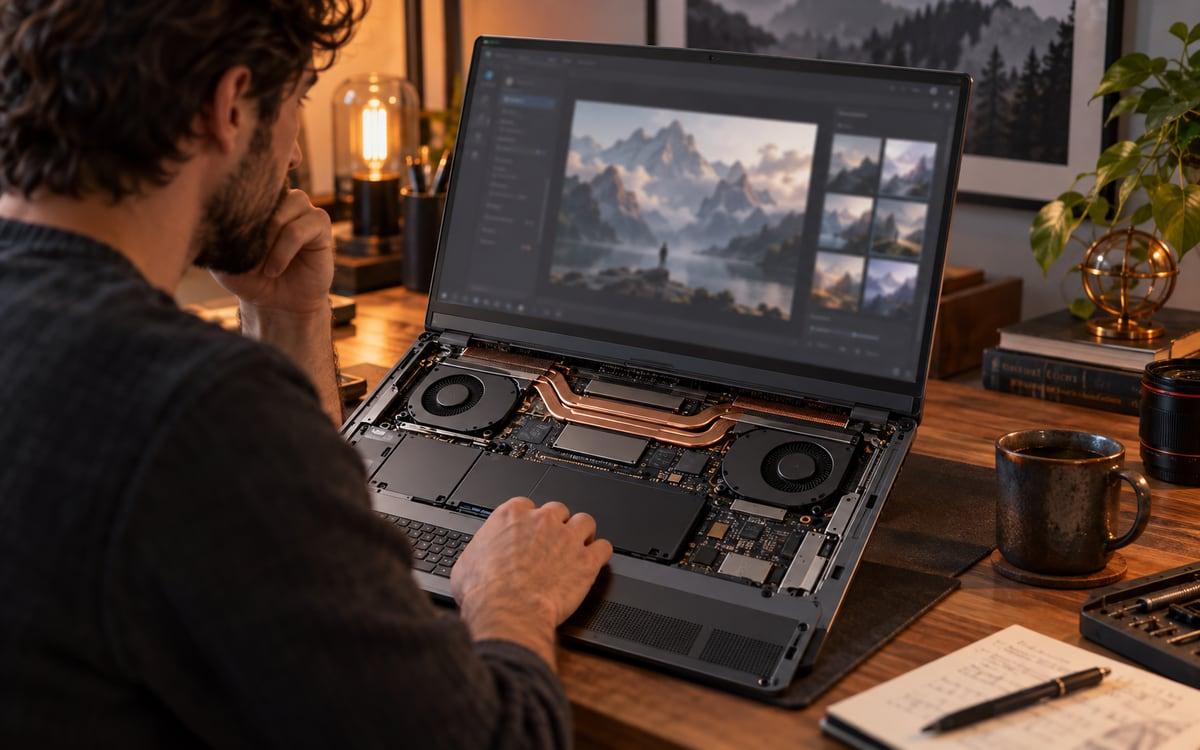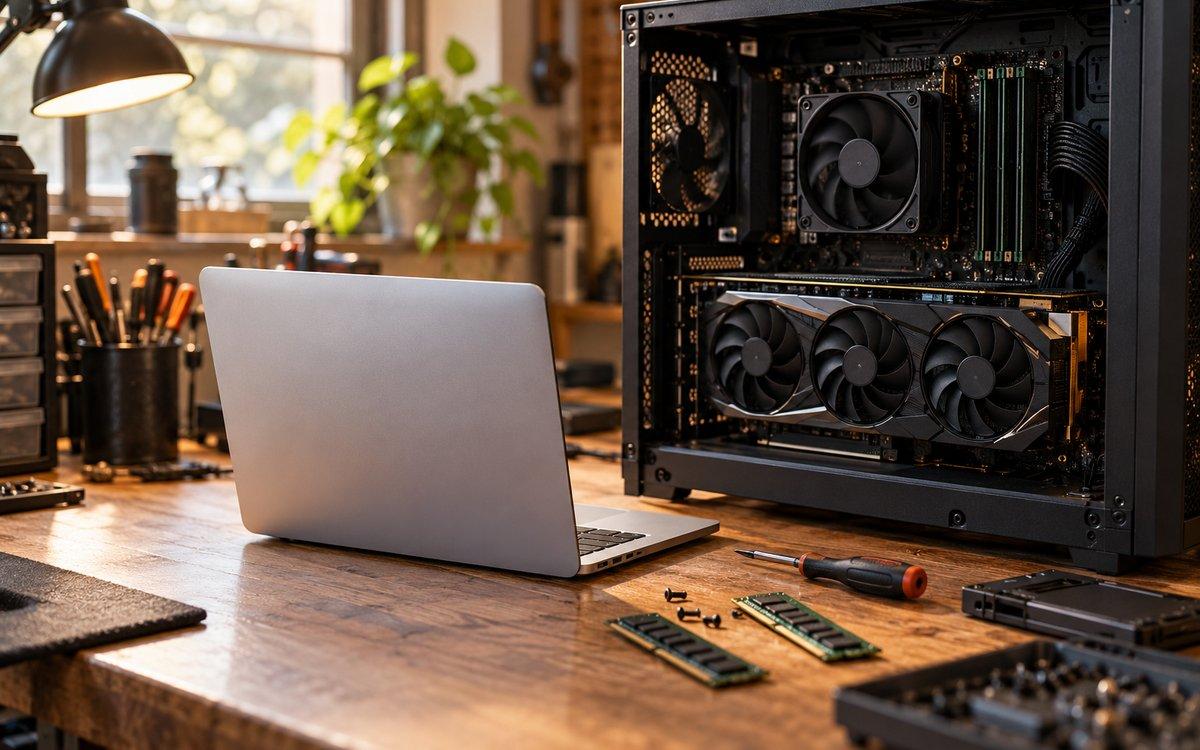
Unified memory and discrete GPU VRAM describe different memory arrangements. Compare whether your complete workload fits, whether the runtime supports the machine and how quickly it completes your task. The same advertised capacity does not establish equivalent AI performance.
What does unified memory mean?
Apple's Metal documentation defines unified memory as GPU memory shared with the CPU. In a buying comparison, that means the shared pool must be considered alongside the rest of the system's needs. It is not a dedicated graphics-memory number that can be substituted into every discrete GPU requirement.
Separate three questions in the buying decision
Our framework asks: can the software run, can the complete task fit, and is the turnaround acceptable? Answer them in that order. A large memory configuration cannot fix an unsupported runtime. A supported runtime that can load a model does not establish useful interactive speed. Ask for results on the exact workflow rather than comparing a memory figure in isolation.
A comparison sheet for two real machines
Fill this table with the actual configurations you can buy. Leave unknown cells blank and request evidence; do not convert an absent measurement into a score.
| Decision | Machine A | Machine B |
|---|---|---|
| Runtime and model compatibility | Record verified support | Record verified support |
| Memory available during the task | Measure with usual apps open | Measure with usual apps open |
| Prompt/context and output size | Use the same test | Use the same test |
| Time to accepted result | Record repeated runs | Record repeated runs |
| Full ownership cost | Include necessary peripherals | Include necessary peripherals |
Context and concurrency belong in the memory budget
Ollama's context documentation says increasing context increases memory demand and shows ollama ps for inspecting allocation and offloading. Its FAQ also describes extra memory pressure from parallel requests. These runtime details illustrate why a model's download size is not a complete capacity plan. Check the documentation for the runtime you intend to use rather than applying Ollama settings to every tool.
Measure the work you actually do
Our suggested comparison has a short interaction, a representative long input and a repeated task with your normal applications open. Keep model version, quantization, context and output target fixed where the runtimes allow it. Record failures as well as successes. We have not compared machines in a lab here, and this guide contains no tokens-per-second or purchase winner claims.
Plan an upgrade around the missing constraint
If your present machine already completes the task, identify what is unacceptable before replacing it: waiting time, capacity, portability or software access. Our workstation checklist and upgrade versus build guide help turn that constraint into a shortlist. Record the date and country of any quote; this article does not contain live regional prices.
Frequently asked questions
Is 32 GB unified memory the same as 32 GB dedicated VRAM?
No. The arrangement and competing system demands differ; compare the complete workload.
Does more memory always make local AI faster?
No. Capacity, software support and measured task time are separate criteria.
Can model download size determine required memory?
Not alone. Include context, runtime allocations and concurrent work.
Sources & further reading
Primary sources checked Oct 17, 2026. Vendor statements are attributed; editorial advice is our own.
- 1MTLDevice hasUnifiedMemory ↗Apple Developer
- 2Context length ↗Ollama
- 3
Help us keep this useful. Check contact availability →