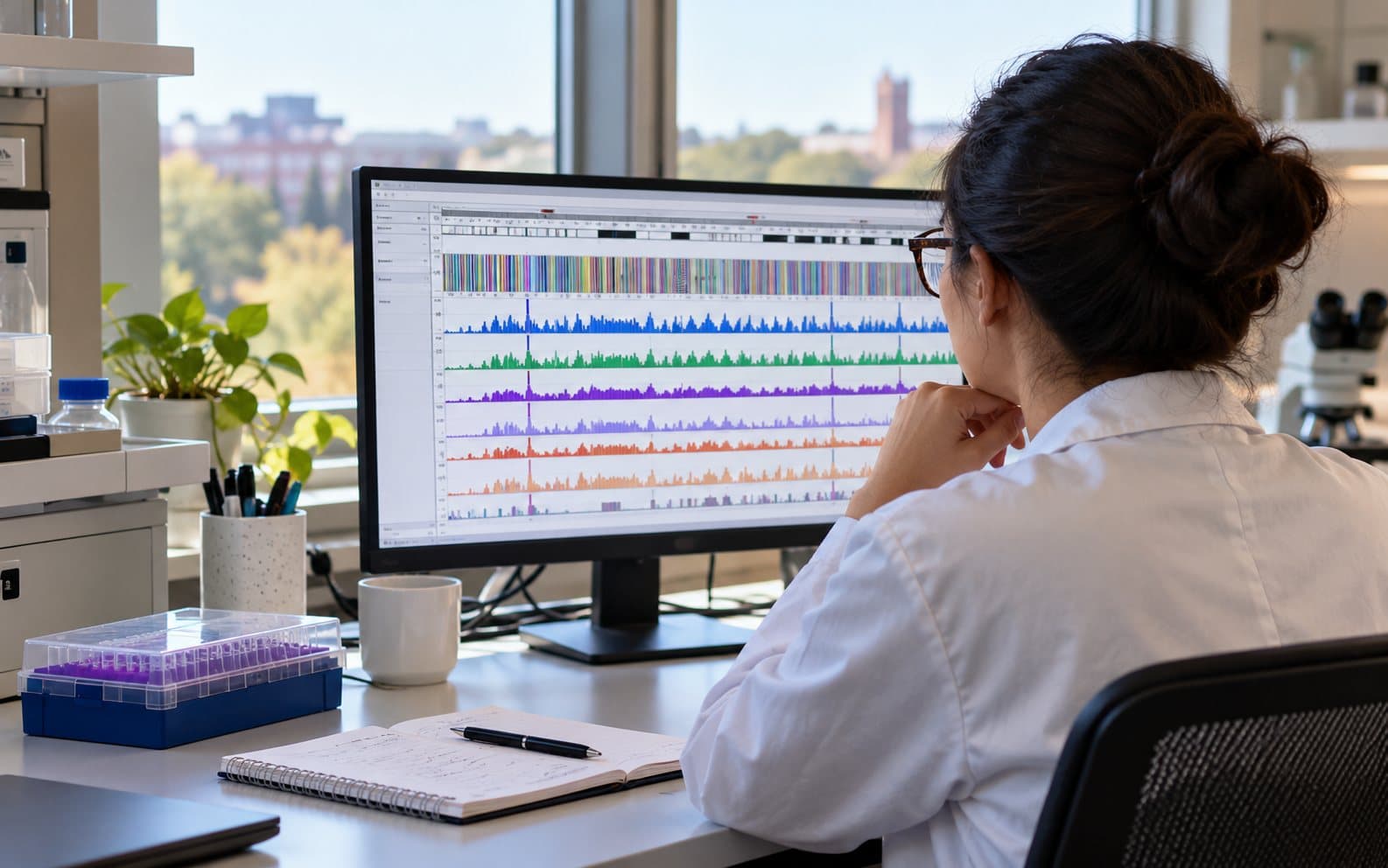
BOTANIC-1 is plant-genomics research. Its pairing with Gemma separates a generalist orchestrator from a specialized genomic model. That division is worth understanding, but it does not turn a generated explanation into proof that a DNA variant causes a plant trait. We focus on the evidence chain and practical questions a reader should ask.
Two models have different jobs
Google DeepMind’s Gemmaverse story describes Living Models pairing Gemma 4 E4B with BOTANIC-1. Gemma acts as a bioinformatic orchestrator, while BOTANIC-1 evaluates evolutionary constraints. The genomic model was pretrained across 320 plant species. The linked preprint’s identifier contains September 4; the case-study page does not establish a new October 11 release. A reader should distinguish the date of our coverage from the date of the underlying work.
A useful prediction is not causal proof
The preprint describes a modular research workflow and a melon example. Our interpretation is that an orchestrator’s explanation needs to remain traceable to tool output and genomic evidence. Assigning a plausible candidate variant is not equivalent to demonstrating causation. A narrow research example also cannot establish reliability for every crop or environment. This article makes no claim about improved harvests, commercial breeding performance or healthcare, and we have not executed either model.
Build a variant-evidence worksheet
For each proposed variant, record its genomic location, reference assembly, sample identifier, model score and the independent information used to prioritize it. Keep a separate field for a causal claim and the experiment that would support it. This is our suggested review structure, not a protocol supplied by the project. If the agent cannot identify which source supports a statement, mark that statement unresolved. Preserve candidates the workflow discarded as well as those it selected so later reviewers can inspect selection effects.
Evaluate the orchestrator as well as the model
Our proposed audit starts with questions whose expected evidence is known. Ask whether the orchestrator calls the intended tools, preserves identifiers and describes contradictory evidence accurately. Log a failed command as a failure rather than silently substituting a fluent answer. Do not score only the final paragraph: a plausible conclusion reached through the wrong data is still a workflow problem. When comparing revisions, use the same inputs and record any changes to the reference data, tool configuration or human guidance.
What to check before using the workflow
Confirm access conditions and terms for each model, dataset and tool rather than inferring commercial permission from a case study. Decide what information can leave the institution and where logs are retained. For a public article or classroom discussion, keep hypothetical examples distinct from measured outcomes. Readers in any country should evaluate scientific evidence on those terms rather than on the prestige of a provider. The weekly research overview places this older plant-genomics work alongside dated announcements without labeling everything a new launch.
Frequently asked questions
Is BOTANIC-1 a general chatbot?
It is described as a specialized plant-genomics model; Gemma provides the generalist orchestration role.
Does a variant score prove causation?
No. A prioritized candidate requires appropriate independent evidence before a causal conclusion.
Is this a healthcare deployment?
No. This article covers plant-genomics research and does not establish clinical usefulness.
Sources & further reading
Primary sources checked Oct 11, 2026. Vendor statements are attributed; editorial advice is our own.
- 1Living Models pairs Gemma 4 with BOTANIC-1 ↗Google DeepMind / Living Models
- 2Long-context plant genomic foundation models ↗BOTANIC-1 authors / bioRxiv
Help us keep this useful. Check contact availability →

