Samsung announced a combined $1 billion Helix investment on September 29, with Samsung Electronics contributing $500 million. This is an infrastructure commitment, not a new AI model or a demonstrated improvement in inference cost. Buyers still need operational capacity, service terms and workload evidence.
What Samsung announced
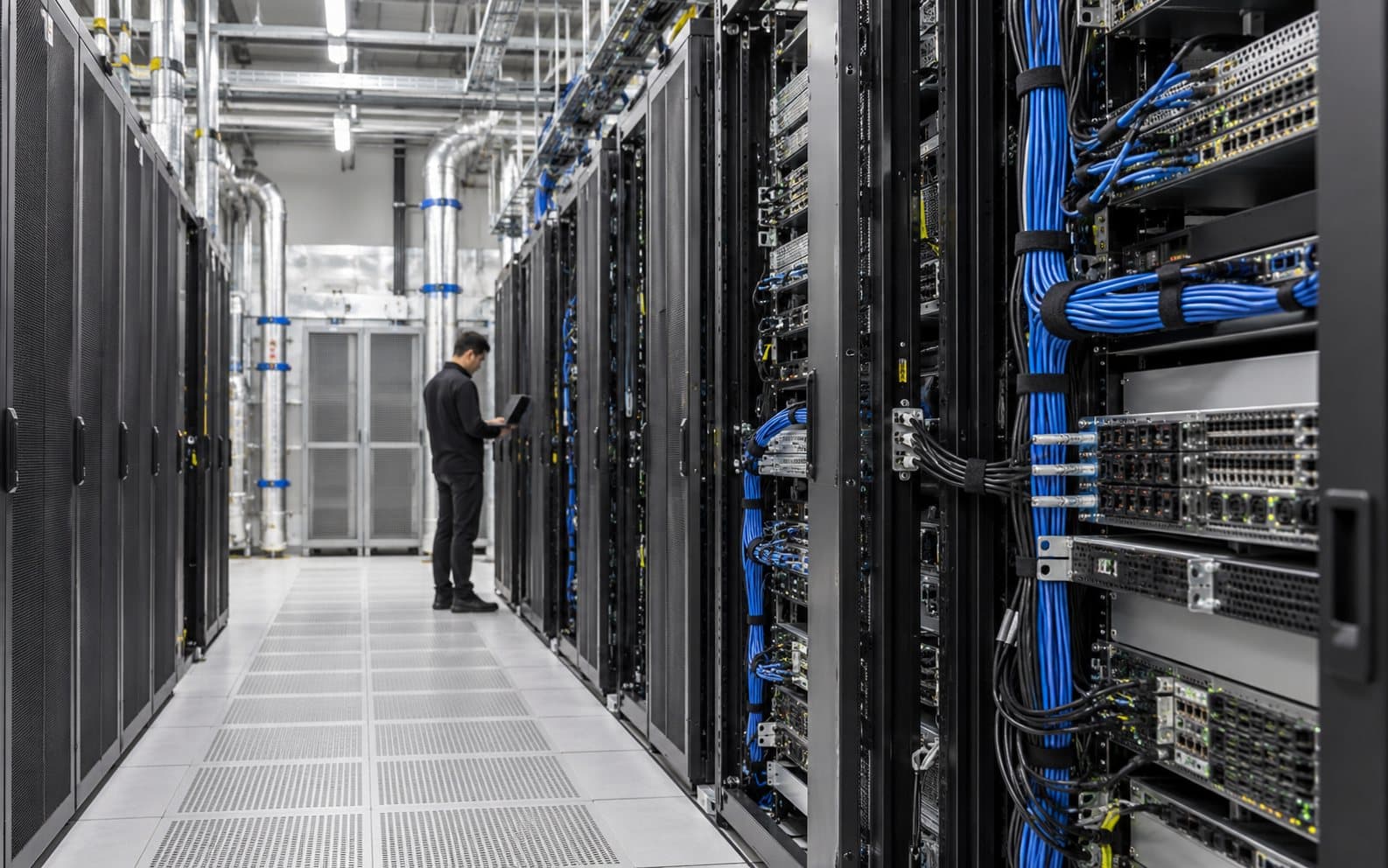
Samsung’s September 29 announcement names six investing businesses: Samsung Electronics, Samsung C&T, Samsung SDS, Samsung SDI, Samsung Life Insurance and Samsung Fire & Marine Insurance. Together they announced $1 billion for Helix Digital Infrastructure, established by KKR. Samsung Electronics supplies $500 million; the other five supply the remainder. Samsung describes Helix as combining data-center development and operation with electricity infrastructure and fiber networks. It lists KKR, Kuwait Investment Authority, NVIDIA and Vistra as other founding investors. These are Samsung’s reported transaction details and description of the venture, rather than independently verified operating results.
An investment is one stage of the infrastructure story
Our reading is that the useful question is what becomes available to customers, and when. Treat funding, construction, commissioning and a purchasable service as separate milestones. A dollar figure cannot tell a developer whether a particular model will fit, whether an endpoint is available in the required region, or whether a production queue will meet a deadline. Before changing a deployment plan, look for an actual service offering and test its constraints. Infrastructure strategy can be relevant without being a buying signal today. Keep a record of announced plans separately from resources your team can access.
Cooling provides context for Samsung’s broader strategy
The investment follows a separate expansion into cooling. Samsung said on November 6, 2025 that it had completed its acquisition of FläktGroup. That announcement describes central air-conditioning and precision-cooling products and says Samsung intends to grow in AI data centers. It also says FläktGroup will remain an independent subsidiary with its name and existing organization retained. This gives context for Samsung’s infrastructure interest, but the acquisition announcement does not establish a specific Helix supply contract. Our editorial distinction is between owning relevant capabilities and demonstrating that a particular facility has integrated them. Buyers should ask for project-specific cooling and operating evidence.
Existing cloud services are a separate claim
Samsung SDS’s August 11, 2026 release says it was selected to supply GPU resources for Korea’s AI Research Computing Support Project, with services running from July 2026 through March 2027. It identifies B300 and H100 GPUs and says its B300 GPU-as-a-Service offering launched on Samsung Cloud Platform in March. That is evidence of an announced service activity, not proof of Helix capacity. For a prospective customer, the next question is eligibility: a research-support program is not automatically a generally available rental offer. Check the actual product, access route, region and contract before comparing it with another cloud. No workload speed ranking follows from the listed hardware.
A planned data center shows why dates matter
A January 12 Samsung SDS release reports an agreement signed on January 7 to establish a 60 MW AI data center in Gumi. Samsung SDS schedules operations for March 2029 and describes a hybrid approach using air and liquid cooling. Those details belong to that separate project; they are not a Helix capacity announcement. The distinction matters when reading company-wide infrastructure headlines. A future operating target should not enter a spreadsheet as capacity available today. Our suggested procurement record includes announcement date, target opening date, commissioning evidence and service availability, with unknown fields left unknown rather than filled from an unrelated project.
What builders should check next
Keep infrastructure announcements on a watchlist, then make purchasing decisions from the service you can actually use. Ask for supported runtimes, memory limits, data location, queue behavior, failure handling and a complete quote. Run the same representative workload on each candidate and include setup, storage, transfer and reruns in the comparison. These are our evaluation steps, not Samsung performance findings. If your immediate decision is a local machine, use the local AI workstation guide to write the workload first. For enterprise serving, the OpenShift AI deployment checks provide a separate infrastructure checklist.
Frequently asked questions
Is Samsung’s Helix announcement a new AI model?
No. Samsung describes an investment in AI infrastructure, not a model release.
Does the investment prove cheaper AI inference?
No. A buyer needs a current service quote and comparable workload measurements; the investment amount alone cannot establish savings.
Is the planned Gumi data center Helix capacity?
The cited Samsung SDS announcement concerns a separate Gumi project with a March 2029 operating target. Do not combine the two announcements.
Should I postpone a local AI PC purchase?
Decide from your current workload and accessible alternatives. An infrastructure announcement does not establish that a suitable cloud service is available to you.
Sources & further reading
Primary sources checked Oct 9, 2026. Vendor statements are attributed; editorial advice is our own.
- 1Samsung To Invest USD 1 Billion in AI Infrastructure Company Helix ↗Samsung Global Newsroom · Sep 29, 2026
- 2Samsung Electronics Completes Acquisition of HVAC Company FläktGroup ↗Samsung Global Newsroom · Nov 6, 2025
- 3Samsung SDS Launches GPU Computing Services for National AI Research ↗Samsung SDS · Aug 11, 2026
- 4Samsung SDS Signs MOU with Gyeongsangbuk-do and Gumi to Establish AI Data Center in Gumi ↗Samsung SDS · Jan 12, 2026
Help us keep this useful. Check contact availability →