Direct Answer: For edge hardware with 4GB to 8GB of memory, choose Qwen 2.5 3B for programming and structured data extraction, Llama 3.2 3B for general reasoning and multilingual dialog, or Llama 3.2 1B for low-power 4GB devices like the Raspberry Pi 5. Choose Microsoft Phi-3.5 Mini when your edge pipeline requires long 128k context.
Start here
Intended reader: Embedded developers, IoT engineers, and creators building local AI appliances on ARM, Raspberry Pi, Apple Silicon, or mobile NPUs. Practical outcome: A comparative selection sheet matching sub-4B models to memory envelopes, compute power, and task requirements. Advances in distillation and synthetic pre-training in 2026 mean small language models (SLMs) can now execute structured extraction, classification, and conversational reasoning that previously required 13B+ parameter weights.
The rise of capable sub-4B models: parameters versus utility
Large frontier models provide broad world knowledge, but edge devices rarely need encyclopedic recall. They need deterministic JSON output, fast classification, and reliable local query answering. A 3B parameter model quantized to 4-bit requires under 2.2GB of memory and executes on modest 15W–30W hardware without an active datacenter connection.
Model evaluation matrix: Qwen 2.5 vs Llama 3.2 vs Phi-3.5 vs Gemma 2
We evaluated the four leading open sub-4B model families based on official model cards, memory footprints, and practical edge task suitability:
| Model | Parameters | Q4 Size | Min RAM Required | Max Context | Primary Edge Sweet Spot |
|---|---|---|---|---|---|
| Qwen 2.5 3B | 3.09B | ~2.0 GB | 4 GB (8 GB ideal) | 32,768 tokens | Code generation, structured JSON, tool-calling APIs |
| Llama 3.2 1B | 1.23B | ~1.3 GB | 2 GB–4 GB | 128,000 tokens | Raspberry Pi 5 4GB, embedded controllers, lightweight classification |
| Llama 3.2 3B | 3.21B | ~2.2 GB | 4 GB–8 GB | 128,000 tokens | Multilingual customer support, conversational dialog, creative writing |
| Phi-3.5 Mini | 3.82B | ~2.4 GB | 8 GB (16 GB ideal) | 128,000 tokens | Complex reasoning, multi-document synthesis, scientific QA |
| Gemma 2 2B | 2.61B | ~1.7 GB | 4 GB | 8,192 tokens | Conversational quality, low memory mobile deployments |
Hardware constraints: unified memory, bandwidth and cooling
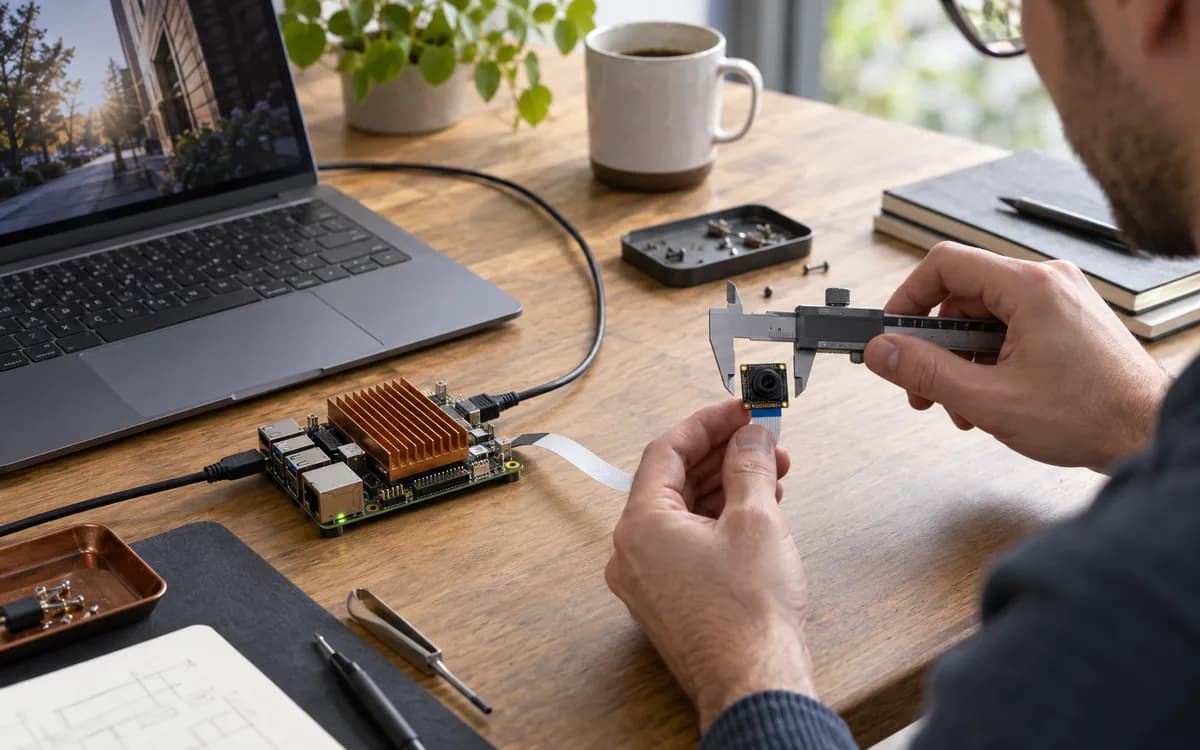
On edge devices without dedicated GDDR VRAM, the LLM shares system RAM with the OS and graphics pipeline. Memory bandwidth is the primary governor of generation speed. A Raspberry Pi 5 with LPDDR4X provides ~17 GB/s bandwidth, yielding 12–15 tokens/sec on Qwen 2.5 3B. In contrast, an Apple Silicon M4 with unified LPDDR5X (120 GB/s) exceeds 50 tokens/sec on the identical model file.
Pre-flight deployment checklist for edge devices
Deploying SLMs on edge devices requires proactive thermal and resource budgeting. Follow this pre-flight verification checklist:
- Check memory headroom: ensure OS and system daemons leave at least 1.5x the model Q4 weight size free.
- Use llama.cpp or Ollama with ARM NEON / Metal acceleration enabled.
- Ensure passive or active heatsink is installed: edge SoC throttling cuts generation speed by up to 50%.
- Clamp context length strictly to expected request lengths (e.g. 2,048 tokens).
- Store models on high-speed NVMe or A2-rated micro-SD cards to minimize initial model load latency.
Edge limitations: when cloud offload remains necessary
Sub-4B models exhibit higher sensitivity to prompt phrasing and lack deep contextual nuance for multi-step legal or medical reasoning. If a task requires unbounded general knowledge or zero-shot novel tool synthesis, implement an edge-to-cloud hybrid routing pattern: use the local SLM to triage, classify, and redact sensitive data, escalating only complex queries to cloud frontier models.
Try this next
Building a retrieval system around your edge model? Learn how to evaluate vector databases in our self-hosted vector DB comparison.
Sources & further reading
Primary sources checked Sep 22, 2026. Vendor statements are attributed; editorial advice is our own.
- 1
- 2
- 3
Help us keep this useful. Send a correction or a primary source →