Identify the official checkpoint first
The official inclusionAI repository is named Ling-3.0-flash-Sante. Its file listing identifies a text-generation model using the bailing_hybrid architecture and custom code, with MIT licensing. The reviewed listing shows roughly 255 GB of files and multiple safetensors shards. This guide verifies that artifact identity; it does not claim a new medical capability or a performance ranking from the word Santé.
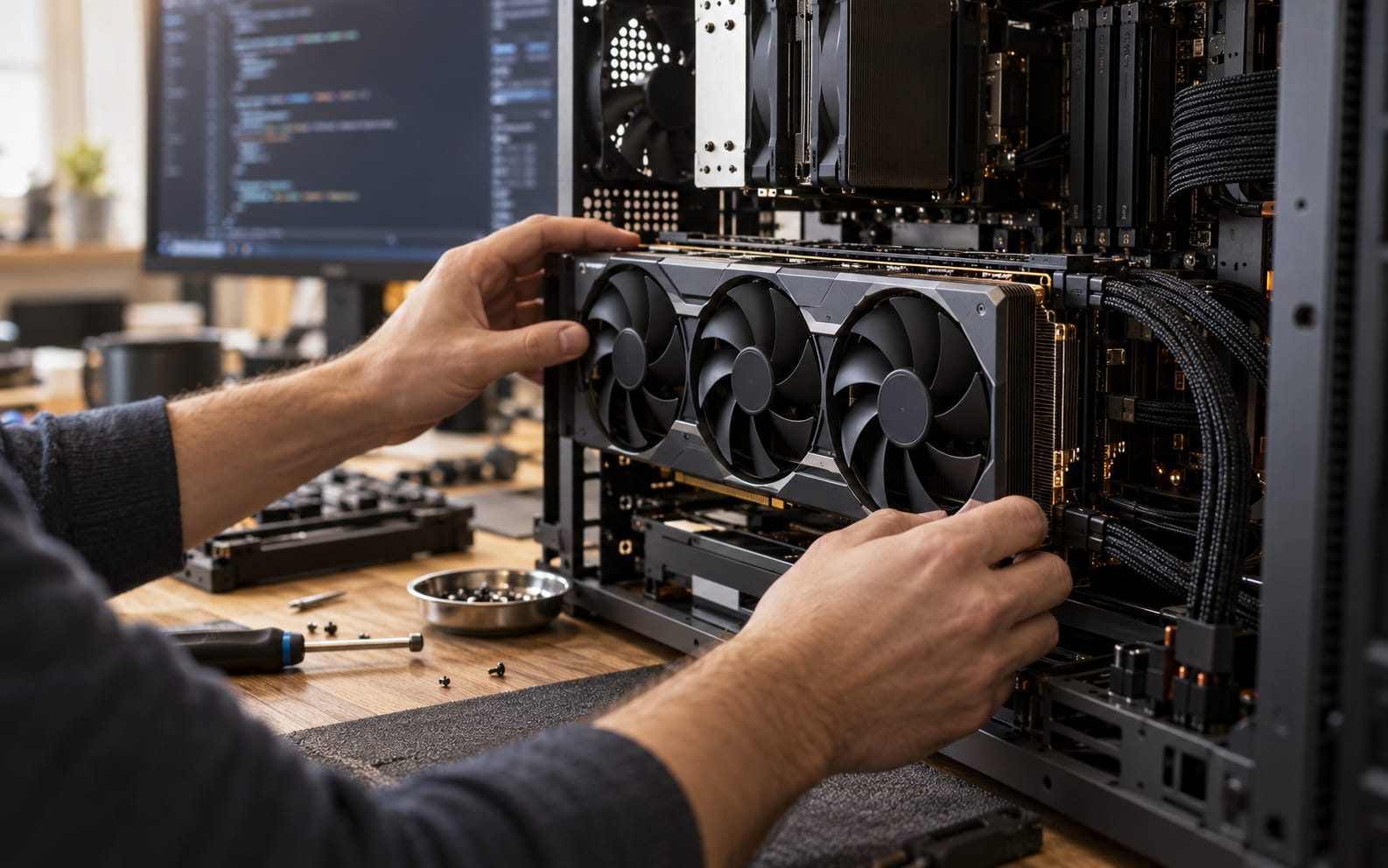
Do not confuse disk size with a GPU requirement
The total size of repository files answers a storage-planning question. It does not establish the peak memory needed for inference. Loaded precision, intermediate tensors, cache length, batch size and offloading all affect a run. Before acquiring hardware, write down the intended context length and number of simultaneous requests. A machine that loads one short request may fail when several long requests arrive.
Check runtime support before a large download
Our suggested preflight begins with the configuration and tokenizer files. Verify that your chosen serving engine supports the exact architecture and revision, then inspect whether its instructions require loading custom repository code. Read that code before executing it and use an isolated environment for the first test. Do not assume support for a similarly named base model automatically covers this variant. Pin the repository revision so later changes do not silently alter your evaluation.
A small, auditable acceptance test
Use a set of fictional questions with answers you can verify locally. Include a formatting task, a short document summary and an explicit unknown. Score accuracy, missing details and fabricated assertions separately. Repeat one request after a clean restart to reveal hidden state or configuration differences. Record the prompt template, generation settings and runtime version alongside the output. This creates a reproducible comparison instead of an unqualified claim that the model is better.
Handle variants as separate artifacts
A community quantization may reduce download or memory needs, but it also introduces another maintainer, conversion process and numerical format. Confirm its base revision and license chain. Compare a small shared task set before moving an existing workflow. If a quantized variant behaves differently, keep that difference visible rather than attributing its results to the original checkpoint. This article does not certify any third-party conversion.
What remains unverified here
The full model-card body was unavailable through our research fetch, although the official file listing was readable. We therefore omit benchmark scores, specialization claims, exact context limits and a consumer-GPU minimum. FyreLinkz has not independently run this checkpoint. Use the official repository as the starting point and check its current documentation before installing; a recognizable name and an available download are not substitutes for workload-specific validation.
Frequently asked questions
Is the 255 GB listing a measured VRAM minimum?
No. It describes repository storage, not peak inference memory. Runtime, precision, context and offloading change memory requirements.
Does this guide establish a healthcare specialization?
No. The accessible official listing does not establish that claim, and this article does not infer it from the model name.
Has FyreLinkz benchmarked this checkpoint?
No. The article verifies the official artifact listing and gives an editorial deployment checklist, not independent performance results.
Sources & further reading
Primary sources checked Oct 25, 2026. Vendor statements are attributed; editorial advice is our own.
- 1
Help us keep this useful. Report a factual correction →