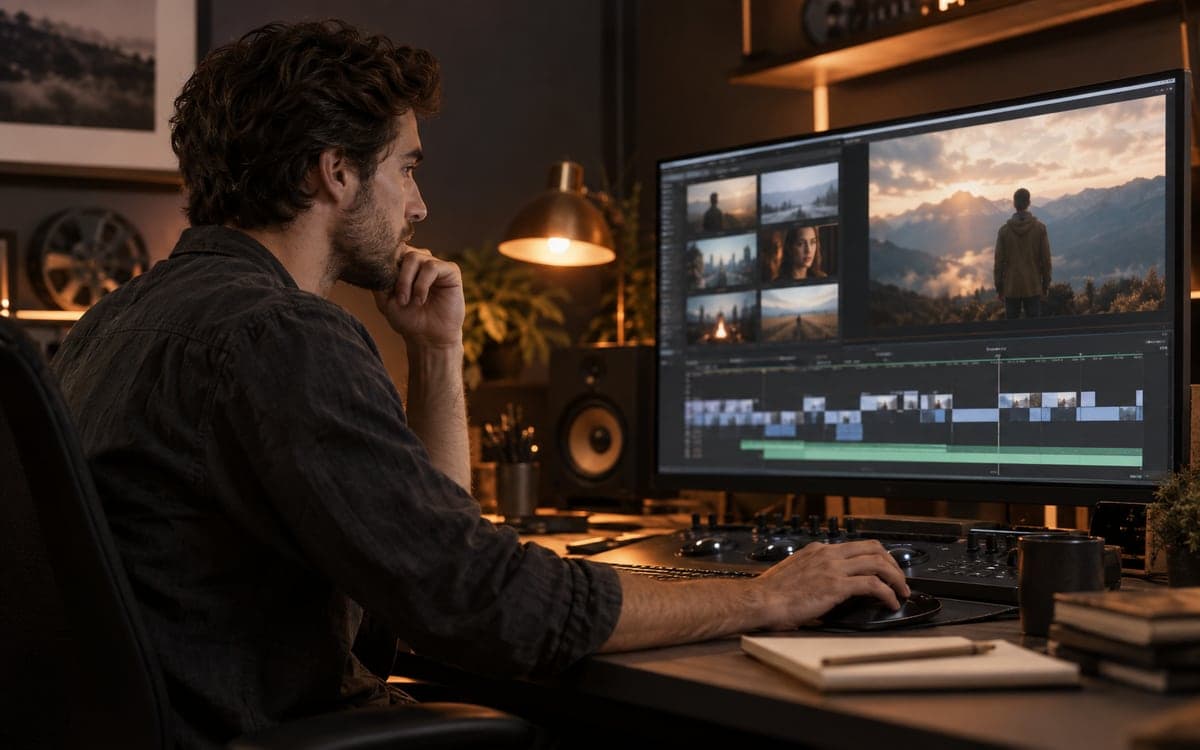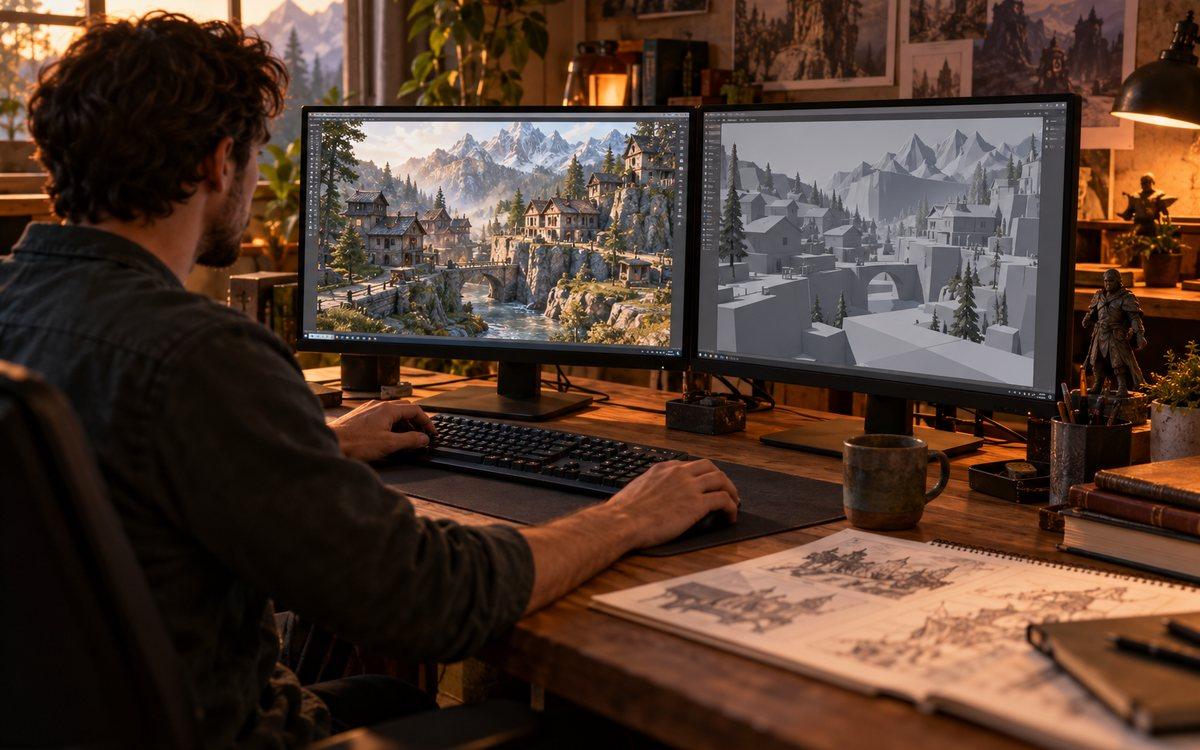
ATAS organizes agentic video around persistent world state. A generated clip can be delivered without being admitted as evidence for future shots.
What ATAS actually reports
The project compiles screenplays into requests with scene, camera and time references. It keeps registered static geometry separate from dynamic event observations. Memory is updated only after review and state checks, while film delivery is a separate decision.
What this changes for the reader
This distinction helps explain why a sequence can look acceptable now yet damage later continuity if every generated detail is treated as authoritative. Our proposed review marks which observations are accepted into state and why. Rejected evidence should remain visible in the log even when the shot itself stays in an edit.
A practical evaluation before adoption
Write three original shots: establish a room, show one event, then revisit the event from another angle. Record location, event identity and time interval for each request. Inspect whether static landmarks remain stable while the event is replayed at the intended moment. Compare delivery decisions with memory-admission decisions.
- Record spatial anchors and event times.
- Track memory admission separately from delivered clips.
- Inspect revisits from a different camera.
Limits and availability to keep in view
This is research reporting, not a guarantee of feature-length coherence. We have not reproduced the pipeline, measured state growth or established generator-specific costs. Generated reconstructions should not be presented as measurements of a real location.
Where to go next
Read our WorldPlay2 controls and deployment checks for the adjacent workflow decision. Keep this project's conditions separate from other models' results. If a dependency, artifact or service limit is unclear, leave it unresolved in the comparison rather than filling the gap with an assumption.
Frequently asked questions
What does ATAS stand for?
Any Time, Any Space, a world-state-centric framework for agentic video generation.
Does every generated shot become memory?
No. The project separates film delivery from validated admission to persistent state.
Has FyreLinkz independently tested ATAS?
No. This article reports the linked primary source and proposes an editorial evaluation; it contains no independent performance benchmark.
Sources & further reading
Primary sources checked Oct 18, 2026. Vendor statements are attributed; editorial advice is our own.
- 1ATAS — primary source and release details ↗ATAS project
Help us keep this useful. Check contact availability →